---
title: "HR Platform: 7 Signs It may be time to reassess your solution"
description: Looking for a UKG PeopleDoc alternative? Discover 7 signs it may be time to reassess your HR platform, document management, workflows, and employee service delivery.
image: https://blog.neocasesoftware.com/hubfs/vignette-blog-2026-Signaux%20Faibles-1.png
---
[ ](https://www.neocasesoftware.com)
- Product
- [Solutions](https://www.neocasesoftware.com/hr-solutions/)
- [Neocase HR](https://www.neocasesoftware.com/hr-solutions/neocase-hr-solution)
- [Neocase HR Ready](https://www.neocasesoftware.com/hr-solutions/neocase-hr-ready-solution)
- [Neocase Employee Journey](https://www.neocasesoftware.com/hr-solutions/neocase-employee-journey)
- [Neocase Employee Relations](https://www.neocasesoftware.com/hr-solutions/neocase-employee-relations)
- [Modules](https://www.neocasesoftware.com/hris-modules)
- [Self-Service Portal](https://www.neocasesoftware.com//hris-modules/hr-self-service-portal)
- [Case & Knowledge Management](https://www.neocasesoftware.com/hris-modules/hr-case-and-knowledge-management)
- [Business Processes Management](https://www.neocasesoftware.com/hris-modules/business-process-management)
- [Employee Document Management](https://www.neocasesoftware.com/hris-modules/employee-document-management/)
- [People Analytics](https://www.neocasesoftware.com/hris-modules/reports-and-analytics)
- [Finance Extension](https://www.neocasesoftware.com/hris-modules/finance-extension)
- [Services](https://www.neocasesoftware.com/services)
- [Pricing](https://www.neocasesoftware.com/services)
- [Integrations](https://www.neocasesoftware.com/integrations)
- [Our integrations](https://www.neocasesoftware.com/integrations)
- [Microsoft Teams](https://www.neocasesoftware.com/integrations/microsoft-teams)
- [Workday](https://www.neocasesoftware.com/integrations/worday)
- [Dayforce](https://www.neocasesoftware.com/integrations/dayforce-and-neocase-integration/https://www.neocasesoftware.com/integrations/dayforce-and-neocase-integration/)
- [Access](https://www.neocasesoftware.com/integrations/neocase-and-access-peoplexd-integration/)
- [Cegid](https://www.neocasesoftware.com/integrations/cegid-and-neocase-integration/)
- [e-Signature Solutions](https://www.neocasesoftware.com/integrations/e-signature-integrations/)
- [Other Solutions](https://www.neocasesoftware.com/integrations/hris-ecosystem-integration/)
- [Sopra HR 4YOU](https://www.neocasesoftware.com/integrations/neocase-and-sopra-hr-integration/)
- [SAP SuccessFactors](https://www.neocasesoftware.com/integrations/neocase-integrated-to-sap-successfactors/)
- [ADP](https://www.neocasesoftware.com/integrations/adp-neocase-integration/)
- [Oracle HCM](https://www.neocasesoftware.com/integrations/neocase-oracle-hcm-integration/)
- Case Studies
- [Success Stories](https://www.neocasesoftware.com/success-stories)
- [Use Cases](https://www.neocasesoftware.com/hr-use-cases)
- Resources
- [Blog](https://blog.neocasesoftware.com)
- [Resources Center](https://www.neocasesoftware.com/hr-resources)
- About
- [Contact us](https://info.neocasesoftware.com/contact-us-old)
- [Neocase by sopra HR](https://www.neocasesoftware.com/about-neocase)
- [Partners](https://www.neocasesoftware.com/our-partners)
- [Support](https://onlinesupport.neocasesoftware.com/)

[ Français](https://blog.neocasesoftware.com/fr?hsLang=en) [ English](https://blog.neocasesoftware.com/?hsLang=en)
[ ](https://www.neocasesoftware.com)
- Product
- [Solutions](https://www.neocasesoftware.com/hr-solutions/)
- [Neocase HR](https://www.neocasesoftware.com/hr-solutions/neocase-hr-solution)
- [Neocase HR Ready](https://www.neocasesoftware.com/hr-solutions/neocase-hr-ready-solution)
- [Neocase Employee Journey](https://www.neocasesoftware.com/hr-solutions/neocase-employee-journey)
- [Neocase Employee Relations](https://www.neocasesoftware.com/hr-solutions/neocase-employee-relations)
- [Modules](https://www.neocasesoftware.com/hris-modules)
- [Self-Service Portal](https://www.neocasesoftware.com//hris-modules/hr-self-service-portal)
- [Case & Knowledge Management](https://www.neocasesoftware.com/hris-modules/hr-case-and-knowledge-management)
- [Business Processes Management](https://www.neocasesoftware.com/hris-modules/business-process-management)
- [Employee Document Management](https://www.neocasesoftware.com/hris-modules/employee-document-management/)
- [People Analytics](https://www.neocasesoftware.com/hris-modules/reports-and-analytics)
- [Finance Extension](https://www.neocasesoftware.com/hris-modules/finance-extension)
- [Services](https://www.neocasesoftware.com/services)
- [Pricing](https://www.neocasesoftware.com/services)
- [Integrations](https://www.neocasesoftware.com/integrations)
- [Our integrations](https://www.neocasesoftware.com/integrations)
- [Microsoft Teams](https://www.neocasesoftware.com/integrations/microsoft-teams)
- [Workday](https://www.neocasesoftware.com/integrations/worday)
- [Dayforce](https://www.neocasesoftware.com/integrations/dayforce-and-neocase-integration/https://www.neocasesoftware.com/integrations/dayforce-and-neocase-integration/)
- [Access](https://www.neocasesoftware.com/integrations/neocase-and-access-peoplexd-integration/)
- [Cegid](https://www.neocasesoftware.com/integrations/cegid-and-neocase-integration/)
- [e-Signature Solutions](https://www.neocasesoftware.com/integrations/e-signature-integrations/)
- [Other Solutions](https://www.neocasesoftware.com/integrations/hris-ecosystem-integration/)
- [Sopra HR 4YOU](https://www.neocasesoftware.com/integrations/neocase-and-sopra-hr-integration/)
- [SAP SuccessFactors](https://www.neocasesoftware.com/integrations/neocase-integrated-to-sap-successfactors/)
- [ADP](https://www.neocasesoftware.com/integrations/adp-neocase-integration/)
- [Oracle HCM](https://www.neocasesoftware.com/integrations/neocase-oracle-hcm-integration/)
- Case Studies
- [Success Stories](https://www.neocasesoftware.com/success-stories)
- [Use Cases](https://www.neocasesoftware.com/hr-use-cases)
- Resources
- [Blog](https://blog.neocasesoftware.com)
- [Resources Center](https://www.neocasesoftware.com/hr-resources)
- About
- [Contact us](https://info.neocasesoftware.com/contact-us-old)
- [Neocase by sopra HR](https://www.neocasesoftware.com/about-neocase)
- [Partners](https://www.neocasesoftware.com/our-partners)
- [Support](https://onlinesupport.neocasesoftware.com/)
Loading...
×
## Book a demo now
## And see it in action
Your details are 100% safe
- ### We will endeavor to get back to you within 24 hours and will schedule a demo based on availability
- ### The demo will be provided remotely to you and will last approximately 60 minutes
×
###### [Employee Document Management](https://blog.neocasesoftware.com/tag/employee-document-management), [Digital transformation](https://blog.neocasesoftware.com/tag/digital-transformation), [Employee Experience](https://blog.neocasesoftware.com/tag/employee-experience)
# HR Platform: 7 Signs It may be time to reassess your solution
Posted on [June 23, 2026](https://blog.neocasesoftware.com/hr-platform-7-signs-it-may-be-time-to-reassess-your-solution) by [Anna Motina](https://blog.neocasesoftware.com/author/anna-motina)
[Home](https://www.neocasesoftware.com/) \> [Neocase Blog](https://blog.neocasesoftware.com/hr-platform-7-signs-it-may-be-time-to-reassess-your-solution) \> **HR Platform: 7 Signs It may be time to reassess your solution**
HR platforms rarely become obsolete overnight.
More often, the warning signs emerge gradually: fewer visible product improvements, growing concerns around governance and long-term sustainability, less responsive support, and structural limitations start creating additional complexity for HR and HR IT teams.
Identifying these signals early makes it possible to start the conversation at the right time—before they become a long-term obstacle.
## 1. Innovation becomes less visible
This is often the first indicator.
When the product roadmap becomes difficult to understand, strategic priorities seem to shift, new developments become less visible, promises around AI and automation do not **always deliver tangible value to HR teams**, organizations naturally begin to question whether the platform will continue supporting their ambitions over the coming years.
Once a platform stops delivering measurable improvements in efficiency, self-service, or process automation, it begins to lose its strategic value.
Today, organizations expect practical innovation, including:
- Intelligent document processing
- HR agent assistance
- Enhanced user experiences
- Automated employee requests
- The ability to evolve HR journeys without excessive complexity
## 2. Service quality no longer meets expectations
A support team that is difficult to reach, inconsistent account management, or a lack of responsiveness are warning signs that should not be missed.
Even a feature-rich platform can become a source of frustration when organizations struggle to obtain customer support when needed to resolve issues, manage changes, or drive transformation initiatives.
As a result, responsive support, strong customer relationships, and close collaboration become critical success factors over the long term.
## 3. The global model becomes harder to sustain
Another common signal appears when the platform continues to operate but becomes increasingly difficult to scale internationally.
Local configurations multiply, processes become harder to standardize, and each new country’s deployment adds complexity instead of reducing it.
When a solution struggles to scale, it ultimately generates more maintenance effort, greater technical debt, and additional coordination work for HR and HR IT teams.
## 4. The Employee Experience becomes fragmented
When employees and managers do not have access to a truly unified portal, or when experiences vary significantly depending on the channel or process used, the HR experience becomes less intuitive and less consistent.
Over time, this fragmentation negatively impacts self-service adoption and employees' overall perception of HR service quality.
## 5. Document Management reaches its limits
An HR document management system can no longer be limited to document storage.
When the document structure is not designed to support global operations, when document-related processes lack flexibility, or when lifecycle governance becomes difficult to manage, the document environment begins to show its limitations.
This is where a more integrated approach to HR documents, employee requests, confidentiality, compliance and HR processes becomes essential.
## 6. Your Dependency on third-party tools keeps growing Service Delivery
Over time, some organizations find themselves adding more and more complementary solutions to compensate for missing capabilities.
Separate tools for document management, workflow automation, employee support, knowledge management or reporting can create a fragmented ecosystem that is harder to manage and more expensive to maintain.
When the HR technology landscape becomes increasingly fragmented, it may be worth reassessing whether a more integrated approach would better support long-term goals.
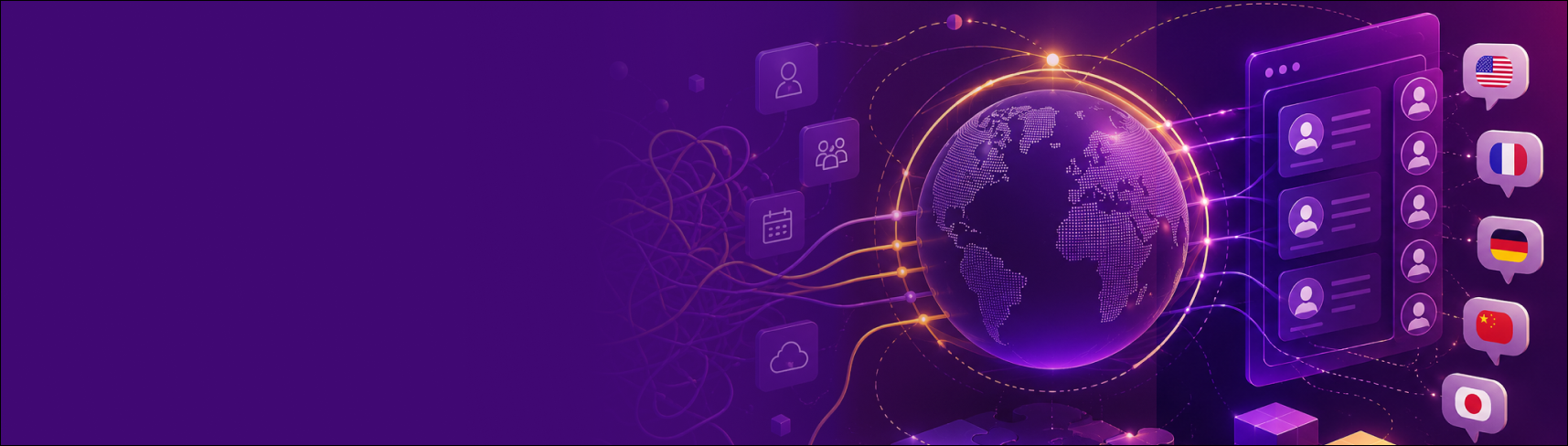
## 7. Integration and multilingual support become sources of friction
For international organizations, integration limitations with the broader HR ecosystem, challenges managing multiple languages, or duplicated content can quickly create lasting complexity.
These issues may seem secondary at first, but they ultimately determine whether a platform can support a scalable and consistent HR operating model.
---
Take stock to reassess at the right time
*In most cases, none of these signals is decisive on its own.*
It is their accumulation that should raise concern: less visible innovation, declining service quality, followed by more structural limitations related to global deployment, employee experience, document management, or integration.
Taking stock at the right time does not mean triggering a disruptive change.
It simply means objectively assessing whether the current platform still supports the organization's ambitions—or whether a more integrated, controlled, and sustainable framework has become necessary.
At Neocase, we believe that a modern HR platform should combine four essential qualities:
- Meaningful innovation
- A strong foundation of trust
- High-quality customer support
- Fully integrated document management connected to HR processes
These capabilities are what enable organizations to build sustainable HR service delivery models that can evolve alongside the business.
[Book a demo](https://info.neocasesoftware.com/book-demo?hsLang=en)
Share this post
##### Anna Motina
### CATEGORIES
- [HR Service Delivery (231)](https://blog.neocasesoftware.com/tag/hr-service-delivery-posts)
- [Press (35)](https://blog.neocasesoftware.com/tag/press)
- [Experience collaborateur (33)](https://blog.neocasesoftware.com/tag/experience-collaborateur)
- [Case Management (31)](https://blog.neocasesoftware.com/tag/case-management)
- [Self-Service Portal (29)](https://blog.neocasesoftware.com/tag/self-service-portal)
- [Product (26)](https://blog.neocasesoftware.com/tag/product)
- [Employee Experience (22)](https://blog.neocasesoftware.com/tag/employee-experience)
- [Knowledge Base (22)](https://blog.neocasesoftware.com/tag/knowledge-base)
- [Best Practices (21)](https://blog.neocasesoftware.com/tag/best-practices)
- [Business Process Automation (20)](https://blog.neocasesoftware.com/tag/business-process-automation-posts)
- [Digital transformation (15)](https://blog.neocasesoftware.com/tag/digital-transformation)
- [Future of HR (15)](https://blog.neocasesoftware.com/tag/future-of-hr)
- [Feature (14)](https://blog.neocasesoftware.com/tag/feature)
- [Artificial Intelligence (13)](https://blog.neocasesoftware.com/tag/artificial-intelligence)
- [Events (12)](https://blog.neocasesoftware.com/tag/events)
- [Fosway (12)](https://blog.neocasesoftware.com/tag/fosway)
- [Partner (11)](https://blog.neocasesoftware.com/tag/partner)
- [Employee Journey (10)](https://blog.neocasesoftware.com/tag/employee-journey)
- [Employee Relations (10)](https://blog.neocasesoftware.com/tag/employee-relations)
- [Employee Document Management (9)](https://blog.neocasesoftware.com/tag/employee-document-management)
- [COVID-19 (8)](https://blog.neocasesoftware.com/tag/covid-19)
- [Customers (7)](https://blog.neocasesoftware.com/tag/customers)
- [Onboarding (7)](https://blog.neocasesoftware.com/tag/onboarding)
- [Chatbot (6)](https://blog.neocasesoftware.com/tag/chatbot)
- [Neocase HR (6)](https://blog.neocasesoftware.com/tag/neocase-hr)
- [EDM (5)](https://blog.neocasesoftware.com/tag/edm)
- [Data Confidentiality (4)](https://blog.neocasesoftware.com/tag/data-confidentiality)
- [Manufacturing (4)](https://blog.neocasesoftware.com/tag/manufacturing)
- [Analytics (3)](https://blog.neocasesoftware.com/tag/analytics)
- [ERM (2)](https://blog.neocasesoftware.com/tag/erm)
- [Monthly Updates (2)](https://blog.neocasesoftware.com/tag/monthly-updates)
- [News (2)](https://blog.neocasesoftware.com/tag/news)
- [Reporting (2)](https://blog.neocasesoftware.com/tag/reporting)
- [Webinar (2)](https://blog.neocasesoftware.com/tag/webinar)
- [offboarding (2)](https://blog.neocasesoftware.com/tag/offboarding)
- [Artificiel Intelligence (1)](https://blog.neocasesoftware.com/tag/artificiel-intelligence)
- [GED (1)](https://blog.neocasesoftware.com/tag/ged)
- [Gartner (1)](https://blog.neocasesoftware.com/tag/gartner)
- [Health and Safety at work (1)](https://blog.neocasesoftware.com/tag/health-and-safety-at-work)
- [Professional Services (1)](https://blog.neocasesoftware.com/tag/professional-services)
- [Quality of work (1)](https://blog.neocasesoftware.com/tag/quality-of-work)
- [Shared Cervice Center (1)](https://blog.neocasesoftware.com/tag/shared-cervice-center)
- [Success Story (1)](https://blog.neocasesoftware.com/tag/success-story)
- [What is..? (1)](https://blog.neocasesoftware.com/tag/what-is)
- [Workday connector (1)](https://blog.neocasesoftware.com/tag/workday-connector)
See all
## See the Power of [HR Service Delivery](https://info.neocasesoftware.com/book-demo?hsLang=en)
[Book a demo now](https://info.neocasesoftware.com/book-demo?hsLang=en)
Blog articles you don’t want to miss directly in your inbox
What is Neocase and how does it help HR teams?
Neocase is a cloud-based HR service delivery platform that automates HR processes, improves employee experience, and optimizes shared service center operations. It helps HR teams reduce manual tasks, increase efficiency, and deliver faster, more personalized services.
What are the main features of Neocase HR solutions?
Neocase offers a wide range of features, including:
- **Case Management** for handling employee requests efficiently
- **Knowledge Base** for self-service and quick answers
- **Document Management** for secure storage and compliance
- **Employee Self-Service Portals** for easy access to HR services
- **AI-powered Automation** to streamline workflows and reduce response times
- **Reports and Analytics** to monitor HR performance and manage key indicators.
Can Neocase integrate with existing HR systems like SAP SuccessFactors or Workday?
Yes. Neocase integrates seamlessly with leading HRIS platforms such as SAP SuccessFactors, Workday, and others. These integrations ensure smooth data exchange and process continuity without disrupting your existing HR ecosystem.
How does Neocase ensure data security and compliance?
Neocase is ISO 27001 certified and fully GDPR compliant. The platform uses secure cloud architecture, encryption, and strict access controls to protect sensitive HR data and maintain compliance with global regulations.
Is Neocase suitable for global organizations and multi-language environments?
Absolutely. Neocase supports multi-country deployments, multiple languages, and localization features, making it ideal for global organizations with diverse workforces.
How can I request a demo or learn more about pricing?
You can ask for informations by visiting our [Contact Page](https://info.neocasesoftware.com/get-in-touch?hsLang=en) or filling out the [demo request](https://info.neocasesoftware.com/book-demo?hsLang=en) form available on our website.
### Continue reading
[HR Document Migration: Change HR Solutions Without Losing Control of Your Documents](https://blog.neocasesoftware.com/hr-document-migration-change-hr-solutions-without-losing-control-of-your-documents?hsLang=en)
[Should Employees adapt to HR processes—or should HR adapt to Employees?](https://blog.neocasesoftware.com/should-employees-adapt-to-hr-processes-or-should-hr-adapt-to-employees?hsLang=en)
[Employee Experience : The Power of a Multichannel HR Approach](https://blog.neocasesoftware.com/the-power-of-a-multichannel-hr-approach?hsLang=en)
### [Solutions](https://www.neocasesoftware.com/hr-solutions/)
- [Neocase HR](https://www.neocasesoftware.com/hr-solutions/neocase-hr-solution/)
- [Neocase HR Ready](https://www.neocasesoftware.com/hr-solutions/neocase-hr-ready-solution/)
- [Employee Journey](https://www.neocasesoftware.com/hr-solutions/neocase-employee-journey/)
- [Employee Relations](https://www.neocasesoftware.com/hr-solutions/neocase-employee-relations/)
### [Integrations](https://www.neocasesoftware.com/integrations/)
- [Workday](https://www.neocasesoftware.com/integrations/workday/)
- [Microsoft Teams](https://www.neocasesoftware.com/integrations/microsoft-teams/)
- [SAP SuccessFactors](https://www.neocasesoftware.com/integrations/neocase-integrated-to-sap-successfactors/)
- [Access](https://www.neocasesoftware.com/integrations/neocase-and-access-peoplexd-integration/)
### [About](https://www.neocasesoftware.com/about-neocase/)
- [Contact Us](https://info.neocasesoftware.com/get-in-touch)
- [Support](https://onlinesupport.neocasesoftware.com/)
- [The Company](https://www.neocasesoftware.com/about-neocase/)
- [Career](https://www.neocasesoftware.com/career/)
- [Partners](https://www.neocasesoftware.com/our-partners/)
- [Press Room](https://blog.neocasesoftware.com/tag/press)
### Follow Us
[Blog](https://blog.neocasesoftware.com/fr?hsLang=en)
[Linkedin](https://www.linkedin.com/company/neocasesoftware/)
[Youtube](https://www.youtube.com/@NeocaseSoftwareInc)
### Subscribe
Receive the Neocase monthly newsletter
### Our addresses
**Neocase Software Northern America**
275 Grove St, Auburndale, Massachusetts 02466 USA
**Neocase Software Europe**
91 Boulevard National, La Garenne-Colombes 92250
- [Terms of use](https://www.neocasesoftware.com/terms-of-use)
- [Privacy Policy](https://www.neocasesoftware.com/privacy-policy)
- [Cookie Policy](https://www.neocasesoftware.com/cookie-policy)
Copyright © **Neocase Software**
```json
{
"@context" : "https://schema.org",
"@type" : "FAQPage",
"mainEntity" : [ {
"@type" : "Question",
"acceptedAnswer" : {
"@type" : "Answer",
"text" : "An organization may consider replacing UKG PeopleDoc when innovation becomes less visible, HR document management reaches its limits, integrations become difficult to maintain, service quality declines, or employee service delivery requires a more centralized and scalable platform."
},
"name" : "When should an organization consider replacing UKG PeopleDoc?"
}, {
"@type" : "Question",
"acceptedAnswer" : {
"@type" : "Answer",
"text" : "Key signs include limited innovation, growing dependency on third-party tools, declining support responsiveness, fragmented employee experience, limited document management capabilities, integration challenges, and difficulty scaling across countries or languages."
},
"name" : "What are the signs that an HR platform may no longer be the right fit?"
}, {
"@type" : "Question",
"acceptedAnswer" : {
"@type" : "Answer",
"text" : "Companies evaluating a UKG PeopleDoc alternative should look for integrated HR document management, HR case management, workflow automation, multilingual capabilities, strong integrations, employee self-service, and a centralized HR Service Delivery platform."
},
"name" : "What should companies look for in a UKG PeopleDoc alternative?"
}, {
"@type" : "Question",
"acceptedAnswer" : {
"@type" : "Answer",
"text" : "Neocase helps organizations modernize HR service delivery by combining HR document management, case management, workflow automation, knowledge management, multilingual support, and employee self-service within a single integrated platform."
},
"name" : "How does Neocase compare as a UKG PeopleDoc alternative?"
}, {
"@type" : "Question",
"acceptedAnswer" : {
"@type" : "Answer",
"text" : "Integrated HR document management connects employee documents with HR requests, workflows, confidentiality rules, compliance requirements, and lifecycle governance, reducing fragmentation and improving HR operational efficiency."
},
"name" : "Why is integrated HR document management important?"
}, {
"@type" : "Question",
"acceptedAnswer" : {
"@type" : "Answer",
"text" : "Organizations can reduce fragmentation by centralizing employee requests, HR documents, workflows, knowledge management, automation, and reporting within a unified HR Service Delivery platform."
},
"name" : "How can organizations reduce fragmentation in HR service delivery?"
} ]
}
```