 Solutions
 Modules
 Services
 Pricing
 Our integrations
 Microsoft Teams
 Workday
 Dayforce
 Access
 Cegid
Cegid
 e-Signature Solutions
 Other Solutions
 Sopra HR 4YOU
 SAP SuccessFactors
 ADP
ADP
 Oracle HCM
 Success Stories
 Use Cases
 Blog
Blog
 Resources Center
 Contact us
 Neocase by sopra HR
 Partners
 Français
 English
For decades, HR service delivery has followed a simple principle:
👉Employees adapt to the process.
Need a document?
Use this form.
Need HR support?
Send an email to this mailbox.
Need information?
Log into this portal.
At a time when work was largely office-based and processes were designed around administrative efficiency, this model made sense.
But today's workforce looks very different.
Employees work across locations, devices, time zones, and job functions. Some spend their days behind a desk, while others rarely sit in front of a computer. Digital habits vary significantly, as do expectations around accessibility and service.
This raises an important question:
Should employees continue adapting to HR processes—or is it time for HR services to adapt to employees?
The traditional model: one channel for everyone
Historically, organizations have focused on standardization.
The goal was clear: create consistent HR processes, reduce administrative effort, and ensure compliance.
While these goals remain important, the way employees interact with HR has fundamentally changed.
Today, a single workforce may include:
- Frontline employees working on shop floors, construction sites, or in stores
- Hybrid employees alternating between home and office
- Corporate teams working across multiple systems and collaboration tools
- International employees operating in different countries and languages
👉 Download our eBook to learn how to Deliver concistent HR Services for deskless employees !
.png?width=456&height=366&name=Ebbok-deskless-multicanal-2026%20(1).png)
Despite these differences, many organizations still expect everyone to follow the same path when accessing HR services.
The result is often friction rather than efficiency.
The Employee Experience gap
When HR processes are designed around organizational structures rather than employee behaviors, employees tend to find their own alternatives.
- Instead of using the official portal, they send an email.
- Instead of submitting a request through the designated process, they contact a manager.
- Instead of searching for information themselves, they ask HR directly….
None of these actions necessarily indicate that employees are resistant to digital transformation.
More often, they indicate that the experience does not align with how employees naturally work.
The challenge is not that employees refuse to engage with HR services.
The challenge is that employees expect HR services to be accessible through the channels they already use.
Employees have changed, so did their expectations
Modern consumer experiences have transformed expectations in every aspect of daily life. People can manage their finances, book travel, order products, and access support through multiple channels with minimal effort.
Employees increasingly expect the same level of flexibility from workplace services.
They want to:
- Access HR services from mobile devices
- Interact through familiar collaboration tools
- Receive support regardless of their location
- Find answers quickly and independently
- Move seamlessly between channels when needed
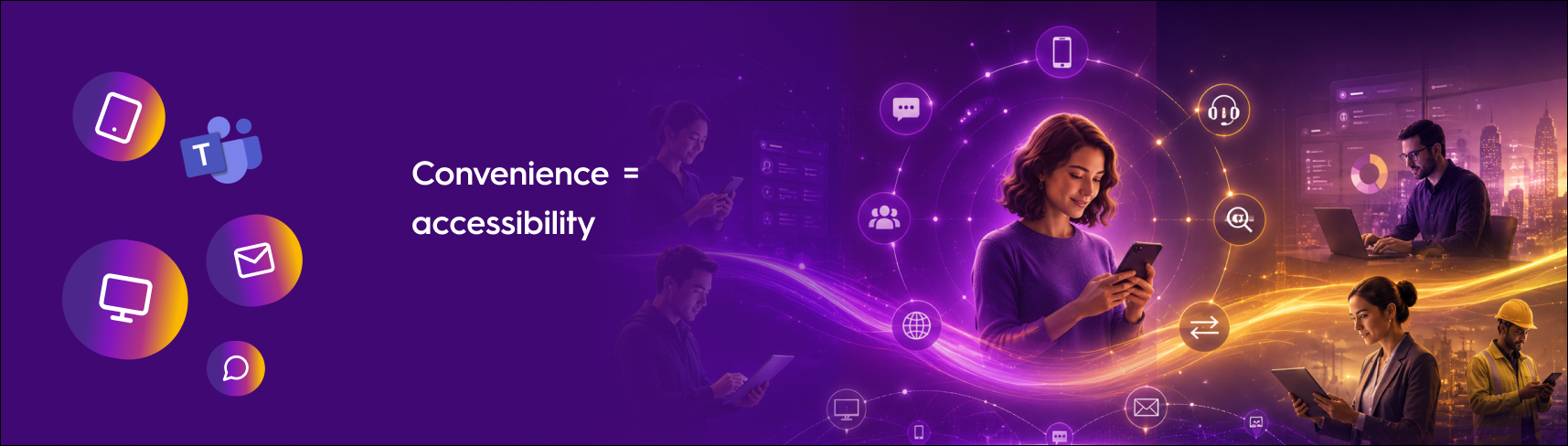
In short, employees expect convenience. And convenience starts with accessibility.
Adapting to Employees does not mean sacrificing standardization
When organizations hear the phrase "HR should adapt to employees," they sometimes assume it means creating different processes for different populations.
In reality, the opposite is true.
The objective is not to create multiple HR operating models.
The objective is to create multiple access points to the same service model.
For example:
- One employee submits a request through a mobile app.
- Another uses Microsoft Teams.
- Another accesses a self-service portal.
- Another sends an email.
From the employee's perspective, the experience feels personalized. From HR's perspective, the request follows the same standardized workflow.
This distinction is critical.
Organizations should standardize the process while personalizing access.
Why Multimodal HR matters
This is where multimodal HR service delivery becomes essential.
A multimodal approach allows employees to choose the communication channel that best fits their context, while ensuring all interactions are managed consistently behind the scenes.
Benefits include:
Improved Accessibility
Employees can access HR services regardless of location, device, or work environment.
Higher Adoption
When services are available through familiar channels, employees are more likely to use them.
Better Employee Experience
Reducing friction creates smoother interactions and faster resolution times.
Greater Operational Efficiency
HR teams gain visibility and control without forcing employees into rigid processes.
❗However, simply adding more channels is not enough.
One of the biggest mistakes organizations make is multiplying communication channels without centralizing the underlying processes.
Providing multiple channels is relatively easy.
Managing them consistently is far more complex.
Without the right foundation, organizations often find themselves dealing with disconnected systems, fragmented employee journeys, duplicate requests, and inconsistent service levels.
This is where modern HR Service Delivery platforms play a critical role.
Solutions such as Neocase enable organizations to offer employees multiple ways to interact with HR—including portals, mobile applications, email, collaboration tools such as Microsoft Teams, and other digital touchpoints—while centralizing every request, interaction, and workflow within a single platform.
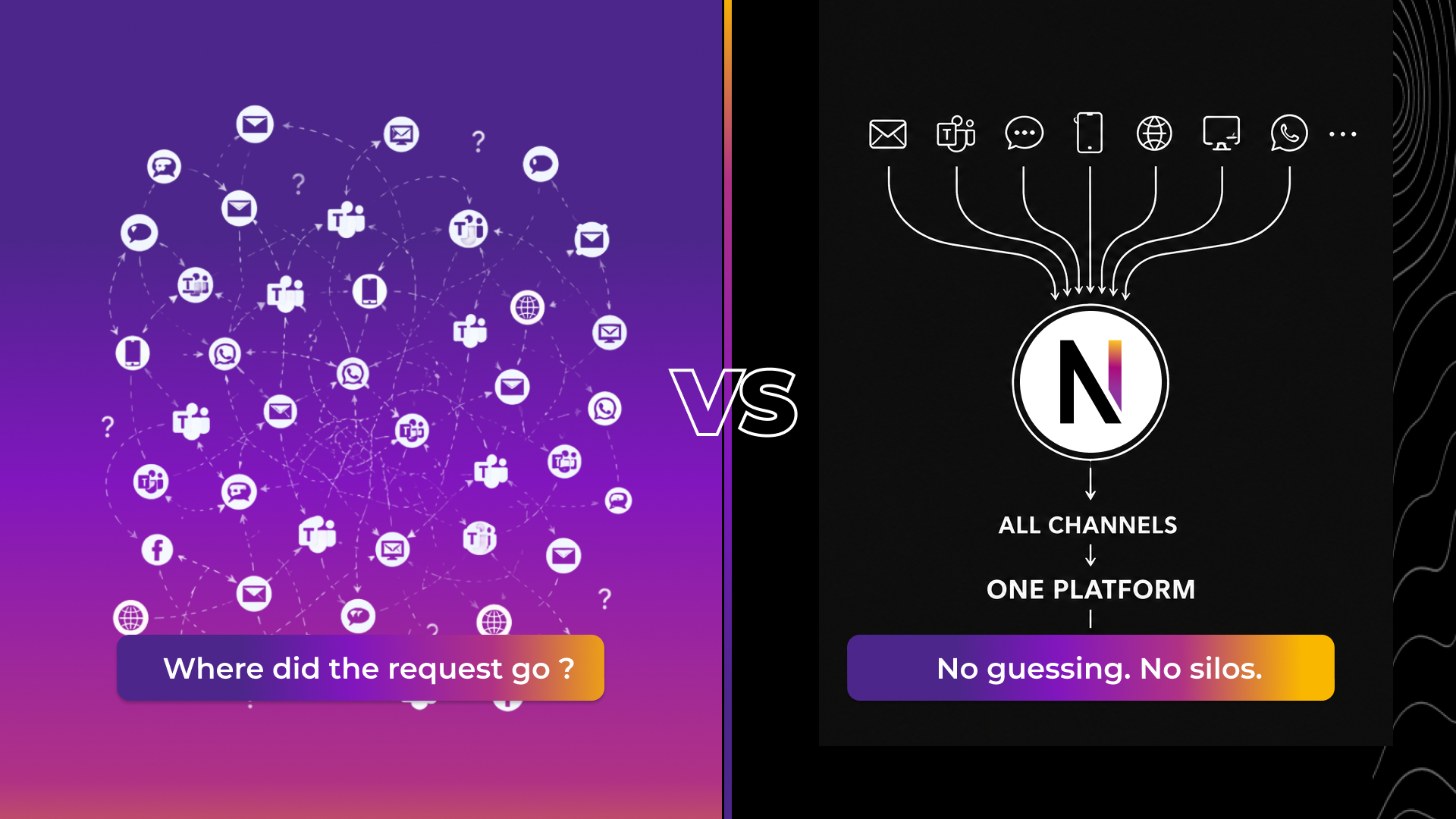
From the employee's perspective, the experience feels simple and intuitive.
From HR's perspective, every interaction follows standardized processes, benefits from complete traceability, and contributes to a unified view of service delivery.
The result is a model where accessibility and operational efficiency no longer compete with one another—they reinforce each other.
The Future of HR Service Delivery
The future of employee experience is unlikely to be built around a single portal, a single channel, or a single way of working.
Organizations are increasingly recognizing that employee populations are diverse, distributed, and constantly evolving.
The most successful HR service delivery models will not be those that force employees into predefined paths.
They will be those that meet employees where they are while maintaining consistency, governance, and efficiency behind the scenes.
The question is no longer whether organizations should standardize their HR processes.
They should.
The real question is:
Can employees access those processes in the way that works best for them?
Do your HR managers have the ability to orchestrate every interaction through a centralized HR Service Delivery platform ?
By combining multichannel access, workflow automation, HR knowledge management, and centralized HR case management, organizations can deliver an employee experience that is both flexible for employees and efficient for HR teams.
This is precisely the challenge that Neocase helps organizations address every day.