 Solutions
 Modules
 Services
 Pricing
 Our integrations
 Microsoft Teams
 Workday
 Dayforce
 Access
 Cegid
Cegid
 e-Signature Solutions
 Other Solutions
 Sopra HR 4YOU
 SAP SuccessFactors
 ADP
ADP
 Oracle HCM
 Success Stories
 Use Cases
 Blog
Blog
 Resources Center
 Contact us
 Neocase by sopra HR
 Partners
 Français
 English
HR digital transformation has become a strategic priority for organizations of all sizes. Automating HR processes, centralizing data, and enhancing the employee experience enable companies to increase efficiency, reduce manual tasks, and meet the growing expectations of today’s workforce.
To ensure success, a structured approach is essential. Below is a practical checklist to guide you through your transformation journey.
1. Define Your HR Objectives
Before digitizing your processes, clearly outline your priorities:
- Enhance the employee experience (onboarding, internal mobility, case management).
- Reduce manual and repetitive tasks for HR teams.
- Centralize and secure HR data across systems.
- Ensure compliance with local and international regulations (GDPR, ISO standards).
2. Map Your Existing HR Processes
- List all current HR processes: recruitment, onboarding, document management, employee requests, internal mobility, offboarding.
- Identify pain points and manual steps that can be automated.
- Determine critical processes requiring full traceability and strict monitoring.
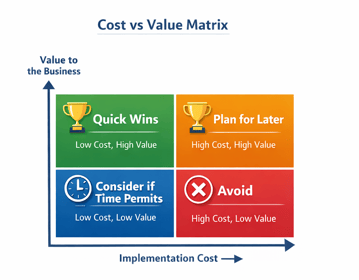 💡 Assess both the cost and business value of each process to determine prioritization.
Low-cost, high-value processes represent your quick wins — delivering immediate impact for employees and HR teams.
3. Assess Your Existing Systems
- Which HRIS, ATS, or HR tools are currently in place?
- Which systems can integrate with a new HR Service Management platform?
- Evaluate compatibility and integration capabilities with modular and flexible solutions such as Neocase.
4. Prioritize Processes to Digitize
- Start with processes that have the greatest impact on employee experience and HR efficiency.
- Remain aligned with budget realities.
Examples include:
- Leave requests
- Document validation
- Onboarding
- Internal mobility
- Incident reporting or grievance management
💡 Use a cost/value matrix to position each process. This allows you to:
- Quickly identify quick wins (low cost / high value)
- Plan higher-cost strategic initiatives for later phases
- Avoid low-value projects
5. Define Roles and Responsibilities
- Clarify ownership of each automated process.
- Ensure managers, HR teams, and employees understand their roles within the new system.
- Establish granular access rights and permissions to guarantee security and compliance.
6. Select the Right HR Solution
- Choose a modular, scalable solution that integrates seamlessly with your existing systems.
- Ensure the platform supports:
- Workflow automation
- Document management
- Employee self-service
- Full traceability and reporting
- Verify security standards, regulatory compliance, and local support capabilities.
7. Plan Deployment and Training
- Develop a clear, phased rollout plan.
- Train HR teams, managers, and employees on how to use the platform effectively.
- Provide supporting materials and resources (FAQs, user guides, tutorials).
8. Measure Results and Optimize
- Track key performance indicators such as:
- Processing times
- Employee satisfaction rates
- Volume of automated requests
- Continuously refine workflows and processes based on feedback and evolving needs.
- Leverage data insights to continuously improve employee experience and HR performance.
Conclusion
HR digital transformation is not merely a technology project — it is a strategic opportunity to enhance employee experience, reduce administrative burden, and ensure compliance.
With a structured methodology and the right solution, such as Neocase, your organization can successfully modernize HR operations and build streamlined, efficient, and secure processes.
💡 Prioritization tip: Start with low-cost, high-value processes to generate quick results and build the business case for future investments.
Map, assess, position on the cost/value matrix — then automate.
Ready to digitize your HR processes and transform the employee experience?
👉 Discover how Neocase can support your journey.